
By Bernicker & Son Landscaping Team ·
A worn lawn does not automatically point to one installation method. Sod and hydroseeding can both create a healthy lawn, but they solve different priorities. The right choice depends on the size and visibility of the repair, the slope, the condition of the soil, how water moves across the yard, and whether the homeowner can keep the surface consistently moist while roots establish.
Bernicker & Son installs and repairs lawns throughout Newburgh and nearby Hudson Valley communities. We evaluate the site before recommending sod installation, hydroseeding, or another lawn-care approach because the green material on top cannot compensate for poor preparation underneath.
Prepare the Ground Before Choosing the Grass
Thin turf is often a symptom. Compacted soil, construction debris, low spots, shade, heavy foot traffic, roof runoff, and an uneven grade can all cause repeated lawn failure. Covering those conditions with fresh sod or seed may look finished briefly, but the same weak areas can return.
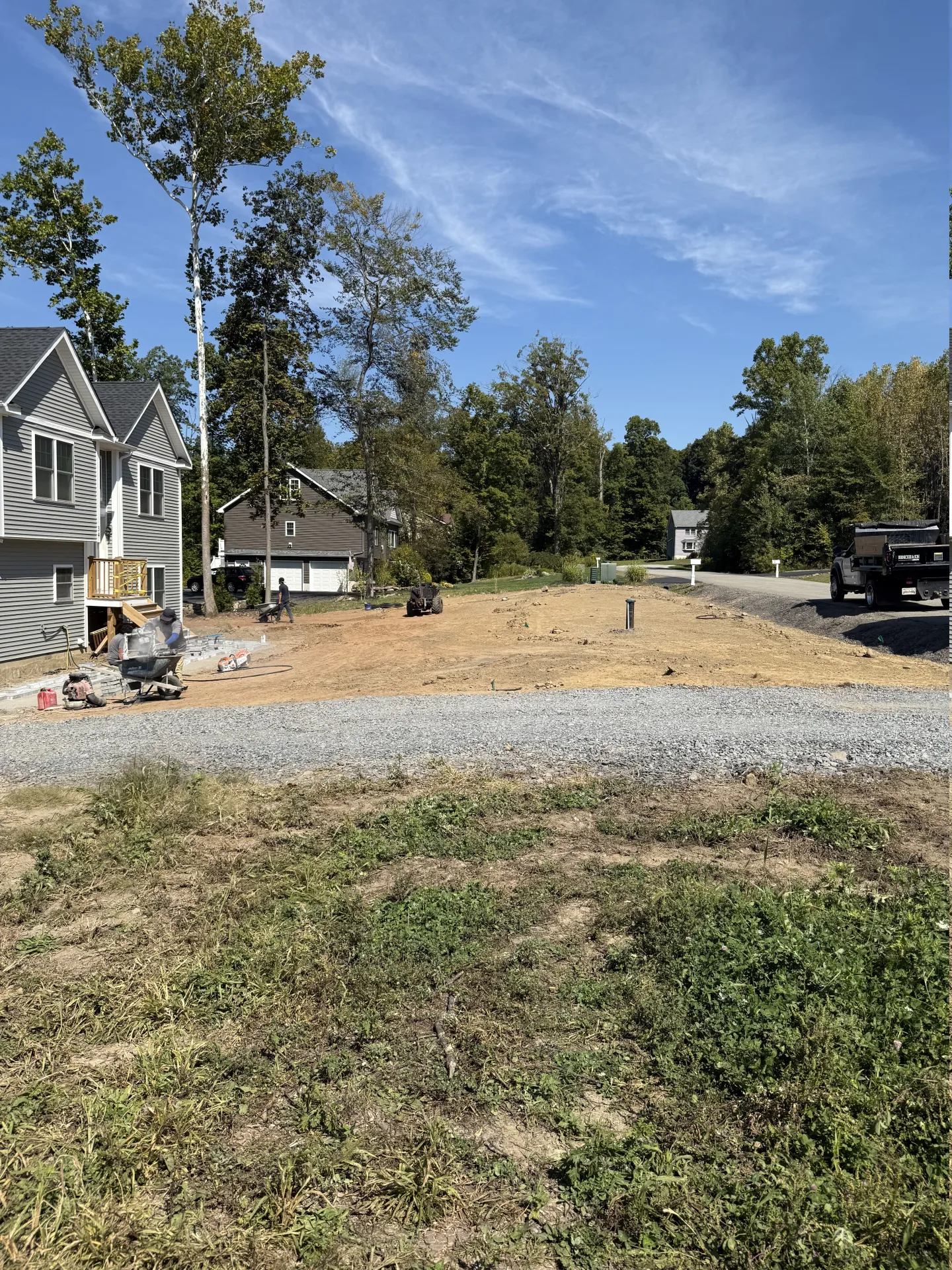
Preparation may include removing failed turf, loosening compacted areas, adding suitable topsoil, correcting the finish grade, and creating a smooth seedbed. If water sits after a storm or cuts a channel across the lawn, drainage should be addressed before the new surface goes down.
When Sod Is the Practical Choice
Sod creates immediate coverage. That makes it useful around front entries, along newly completed patios or walks, and in visible areas where bare soil would be disruptive. Established strips also offer more initial protection than loose seed on a gentle slope, although steep or actively eroding areas still need a site-specific stabilization plan.
The tradeoff is that sod requires more material handling and careful installation. Seams need close contact with prepared soil, edges need protection from drying, and the entire area needs dependable watering. Sod is not a shortcut around grading, soil preparation, or runoff control.
Where Hydroseeding Makes Sense
Hydroseeding can be an efficient way to establish larger lawn areas after grading or site work. The slurry distributes seed, mulch, and other specified materials across a prepared surface, giving broad areas an even starting point without laying individual rolls.
It does not produce an instant finished lawn. Germination and fill-in take time, and the surface needs steady care while young grass develops. Heavy rain, missed watering, pets, and foot traffic can disturb the result. Homeowners who choose hydroseeding should plan for an establishment period rather than a same-day transformation.
Watering Is Part of the Installation
Both methods depend on moisture. New sod needs enough water to keep the root zone from drying as it bonds with the soil. Hydroseed needs the surface kept consistently moist so germination can begin and continue. Shade, heat, wind, soil texture, and rainfall all change how quickly an area dries.
Before scheduling, confirm that hoses or irrigation can reach the full work area and that someone can follow the watering instructions. A large sunny backyard may need a more deliberate plan than a compact shaded front lawn. If the property will be unattended, discuss that constraint before choosing the method.
Hudson Valley Timing and Lawn Use
Cooler growing periods are often easier for lawn establishment than the hottest part of summer, but project timing also depends on grading, drainage work, material availability, and how the yard is used. Families planning an event, households with dogs, and properties with a single access path may value faster coverage in one area while using a slower establishment method elsewhere.
A mixed plan can be practical. Sod may finish a high-visibility edge while hydroseeding covers a larger open section. The important point is that both areas share a sensible grade and drainage plan and can be protected while they establish.
What a Lawn Repair Estimate Should Clarify
A useful proposal should identify the preparation work, installation area, recommended method, access requirements, cleanup, and homeowner watering responsibilities. It should also explain whether drainage or grading is included and how existing beds, walkways, utilities, or irrigation affect the work.
For a property-specific recommendation, share wide photos, approximate dimensions, problem spots after rain, sun conditions, and the result you want. Bernicker & Son can connect lawn repair with landscaping, bed work, and ongoing lawn care so the repaired area fits the rest of the property.
Common Sod and Hydroseeding Questions
Which option looks finished sooner?
Sod provides immediate green coverage. Hydroseeding requires germination and a grow-in period before the lawn fills out.
Can either method fix a wet lawn?
No. If runoff, a low grade, or saturated soil is causing failure, correct that condition first. New turf should be the finish layer, not the drainage solution.
Can I use the lawn right away?
New turf needs protection during establishment. The duration depends on the method, weather, rooting, and site conditions, so follow the instructions provided for the project.
What should I send with an estimate request?
Include the property address, wide photos, approximate lawn size, sun exposure, watering access, timing, and any places where water collects or the grade changes.